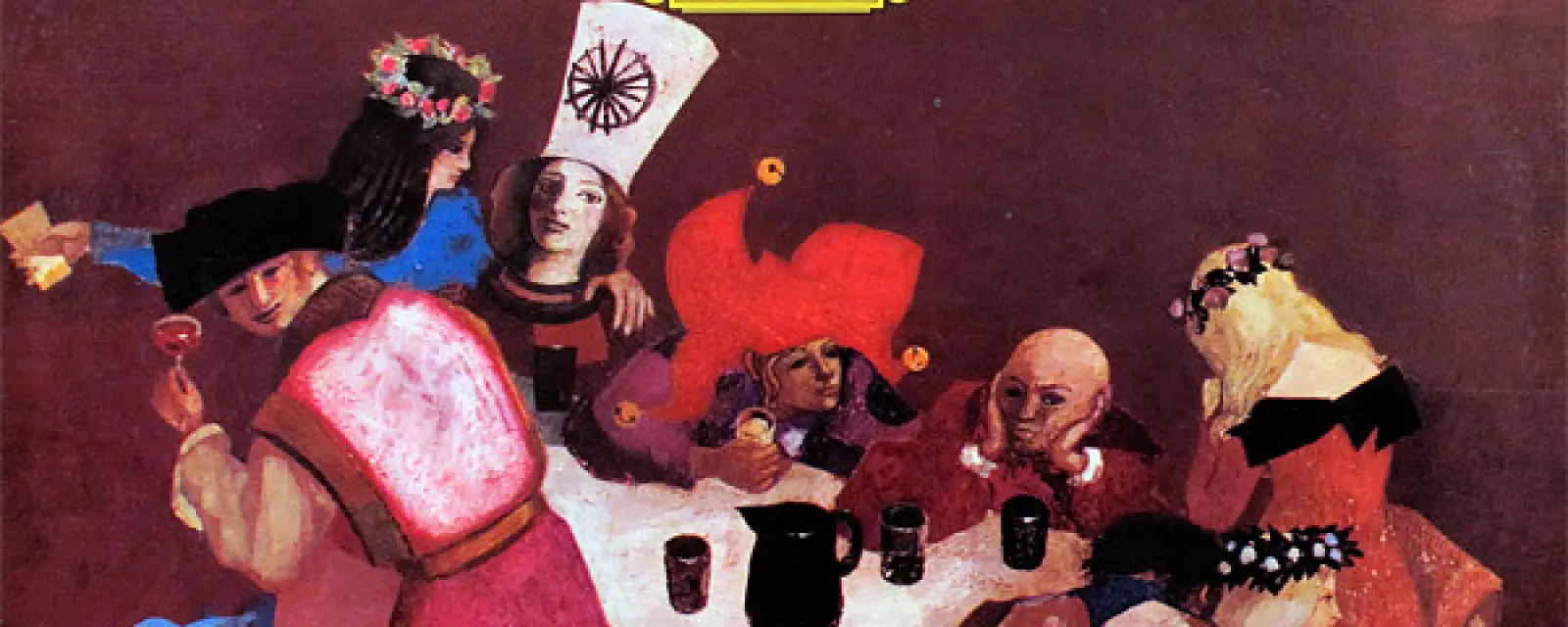
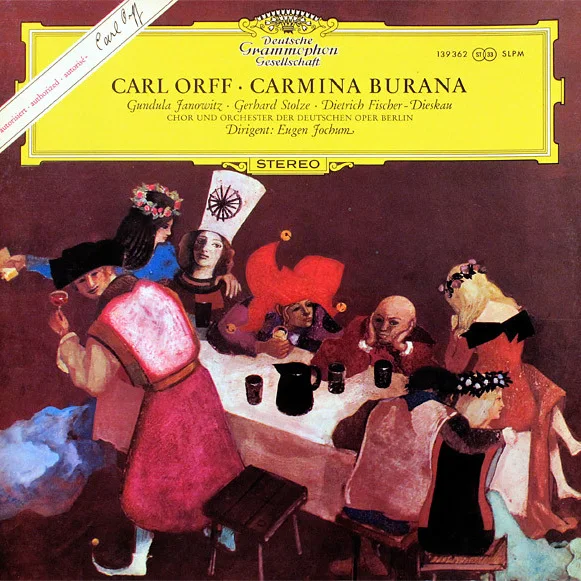
Carl Orff – Gundula Janowitz ∙ Gerhard Stolze ∙ Dietrich Fischer-Dieskau, Chor Und Orchester Der Deutschen Oper Berlin, Eugen Jochum
Carmina Burana
Tracklist
- Carmina Burana
- Fortuna Imperatrix Mundi
- A1.a O Fortuna
- A1.b Fortune Plango Vulnera
- I Primo Vere
- A2.a Veris Leta Facies
- A2.b Omnia Sol Temperat
- A2.c Ecce Gratum
- Uf Dem Anger
- A2.d Tanz
- A2.e Floret Silva Nobilis
- A2.f Chramer, Gip Die Varwe Mir
- A2.g Reie
- A2.h Swaz Hie Gat Umbe
- A2.i Chume, Chum Geselle Min
- A2.j Swaz Hie Gat Umbe
- A2.k Were Diu Werlt Alle Min
- II In Taberna
- B1.a Estuans Interius
- B1.b Olim Lacus Colueram
- B1.c Ego Sum Abbas
- B1.d In Taberna Quando Sumus
- III Cour D’amours
- B2.a Amor Volat Undique
- B2.b Dies, Nox Et Omnia
- B2.c Stetit Puella
- B2.d Circa Mea Pectora
- B2.e Si Puer Cum Puellula
- B2.f Veni, Veni, Venias
- B2.g In Trutina Mentis Dubia
- B2.h Tempus Est Iocundum
- B2.i Dulcissime
- Blanziflor Et Helena
- B2.j Ave Formosissima
- Fortuna Imperatrix Mundi
- B2.k O Fortuna
Musicians


Production
-
Walter Hagen-GrollChorus Master (Choreinstudierung, Chor der Deutschen Oper Berlin)
-
Gerhard HellwigChorus Master (Einstudierung, Schöneberger Sängerknaben)
-
 Eugen JochumConductor
-
Gustav Rudolf SellnerProducer (Aufnahmeregie)
-
 Hans HirschProducer, Recording Supervisor (Artistic Supervision)
Also credited
Also credited. Composed By: Carl Orff. Engineer: Klaus Scheibe. Engineer (Recording Engineer): Klaus Scheibe. Liner Notes: Karl Schumann. Liner Notes (Deutsche Übertragung der Carmina Burana): Wolfgang Schadewaldt.
Release notes
Stereophonic re-recording from 1967.
This is the first German version for this cat#.
Labels:
- Big tulips crown on top
- ‘Deutsche Grammophon Gesellschaft’ below it
- Tulips border
- Rim text at 1 o’clock starts with ‘MADE IN GERMANY’
- ‘ST 33’ in two overlapping rings
Sleeve:
- Gatefold sleeve with 4 extra sheets stapled inside the gatefold
- The three staples are visible on the spine
- Front and back laminated
- ‘Deutsche Grammophon Gesellschaft’ on top of yellow banner
- ‘ST 33’ in two overlapping rings
- ‘»autorisiert · authorized · autorisé« Carl Orff’
- ‘Printed in Germany by Gebrüder Jänecke, Hannover’
- ‘Manufactured by Deutsche Grammophon, Hamburg‘
- ‘Der Abdruck des lateinischen Gesangtextes und der deutschen Übertragung erfolgte mit freundlicher Genehmigung des Verlages B. Schott’s Söhne, Mainz’
- Liner notes in German, English and French
- Includes the libretto in original languages [Latin, Middle High German], German, English, and French
Catalog numbers:
- 139 362 SLPM on front of sleeve
- SLPM 139 362 on spine and labels
- 139 362 on back of sleeve
Other information:
- Recorded October 1967 in the UFA-Tonstudio, Berlin
- Labelography code: GY7
- Tracks are sequentially numbered from 1 to 25 on back cover. No track positions are given on the labels
- Runouts are stamped
- Catalog number in runout side B appears twice on top of each other, where in the first line 93 is stamped inside each other
Related
 Symphonie Nr. 5 C-Moll Op. 67
Beethoven - Berliner Philharmoniker, Herbert von Karajan, 1977
Shares Hans Hirsch
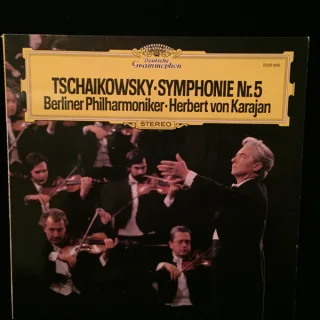 Symphonie Nr. 5
Tschaikowsky - Berliner Philharmoniker ▪ Herbert von Karajan, 1976
Shares Hans Hirsch
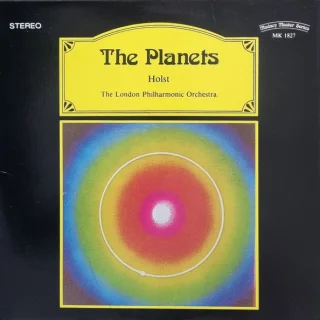 The Planets
Gustav Holst - Philharmonic Promenade Orchestra, London Philharmonic Choir Conducted By Sir Adrian Boult
Also Modern
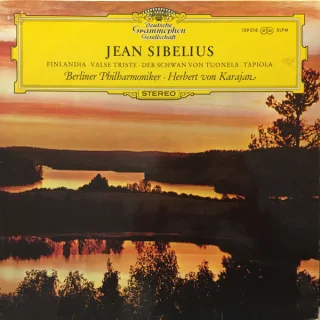 Finlandia · Valse Triste · Der Schwan Von Tuonela ·Tapiola
Jean Sibelius - Berliner Philharmoniker · Herbert von Karajan, 1967
Also Modern
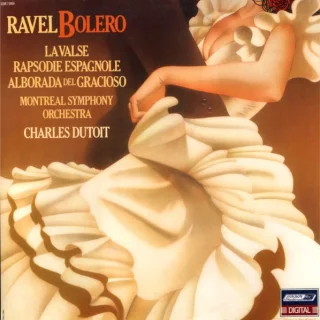 Bolero / La Valse / Rapsodie Espagnole / Alborada Del Gracioso
Ravel, Montreal Symphony Orchestra, Charles Dutoit, 1982
Also Modern